 Open dissertation [PDF] ↗Abrir tesis [PDF] ↗
 Thesis Showcase // TU Delft // 2026Tesis doctoral // TU Delft // 2026
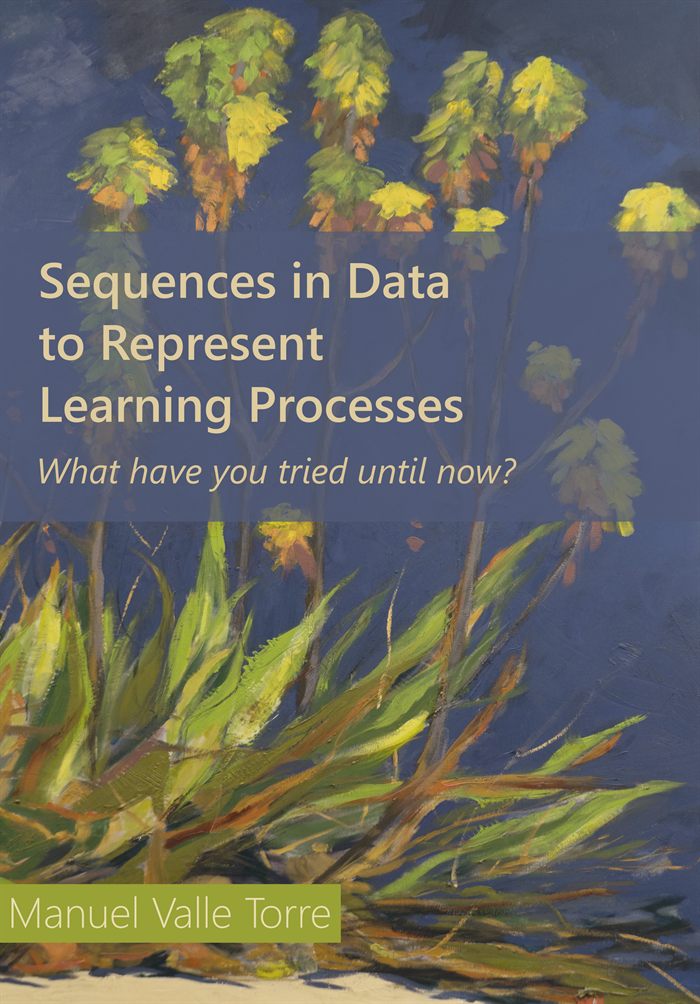
Sequences in Data to Represent Learning ProcessesSecuencias en datos para representar procesos de aprendizaje
Manuel Valle Torre
For a maguey to produce a towering quiote—or to be harvested for mezcal—its growth must happen in the right order and over the right amount of time. If this long, and mostly invisible, process is short-circuited, the output lacks substance. The same is true for learning.Para que un maguey dé un quiote altísimo —o para que sirva para hacer mezcal—, tiene que crecer en el orden correcto y durante el tiempo que necesita. Si se apura ese proceso largo y casi siempre invisible, el resultado se queda hueco. Con el aprendizaje pasa lo mismo.
The problemEl problema
A polished product can hide an unfinished process.Un buen resultado puede esconder un aprendizaje a medias.
With the popularization of AI, both a novice delegating all the work and a more experienced hard worker can generate identical results in seconds; the final product is no longer a reliable measure of competence. However, we have the tools to make students' learning processes visible and be able to support them in real time.Hoy, con la IA, un principiante que le deja todo el trabajo a la máquina y alguien con experiencia que se esfuerza de verdad pueden entregar exactamente lo mismo en segundos. Por eso, el trabajo final ya no basta para saber cuánto aprendió alguien. La buena noticia es que ya tenemos herramientas para ver cómo aprenden los estudiantes y ayudarlos justo cuando lo necesitan.
Interactive research journeyUn recorrido por la investigación
Follow the growth cycleSigue el ciclo de crecimiento
Select a phase to trace how the work moves from observing learning sequences to supporting learners while they work.Elige una fase para ver cómo la investigación pasa de observar cómo aprenden los estudiantes a ayudarlos mientras trabajan.
Phase 01: AnalyzeFase 01: Observar
Make the process visibleHacer visible el proceso
The first task is to look beyond final products. Sequence analysis can reveal the structure and fine-grained actions of problem solving, but static artifacts still conceal the trial-and-error that produces them.El primer paso es mirar más allá del resultado final. Fijarnos en el orden en que un estudiante hace las cosas nos muestra, paso a paso, cómo resuelve un problema. Un trabajo terminado, en cambio, no deja ver todos los intentos y errores que hubo en el camino.
EdX Log Data Analysis Made Easy: Introducing ELAT ↗
Sequence and process visualization for MOOC logs at scale.Una herramienta para ver, paso a paso, cómo aprenden miles de personas en cursos en línea.
Chapter 3Capítulo 3 // LAK 2024The Sequence Matters in Learning ↗
A systematic review identifying the gap between analysis and real-time intervention.Un repaso de muchos estudios que muestra que casi nadie usa estos datos para ayudar al estudiante en el momento.
Chapter 4Capítulo 4 // arXiv 2026What makes an Expert? ↗
Comparing problem-solving practices in data science notebooks.Cómo resuelven problemas de análisis de datos los expertos comparados con los principiantes.
PropositionsProposiciones
Ten positions on process, AI, and learning.Diez ideas sobre el proceso, la IA y el aprendizaje.
- 01
Thanks to Generative AI (GenAI), the quality of unsupervised artifacts—like an essay or code snippet—went from imperfect to useless as a proxy for student competence. (This thesis)Con la IA generativa, una tarea hecha en casa —un ensayo o un programa— ya no dice nada de lo que el estudiante sabe: antes era una pista imperfecta; ahora, inútil. (Esta tesis)
- 02
Unproductive help-seeking with GenAI does not self-correct over time; without explicit intervention, use of AI tools tends toward dependence rather than learning. (This thesis)Pedirle ayuda a la IA de mala manera no se corrige solo con el tiempo; si nadie interviene, los estudiantes terminan dependiendo de ella en vez de aprender. (Esta tesis)
- 03
The value of AI in education lies not in optimizing performance but in supporting the learning process: a well-timed encouragement can help more than a precise explanation. (This thesis)Lo valioso de la IA en la educación no es subir las calificaciones, sino acompañar el proceso de aprender: unas palabras de ánimo en el momento justo pueden ayudar más que la explicación perfecta. (Esta tesis)
- 04
Delegation is a valid professional strategy; education must shift from forbidding GenAI delegation to teaching students when to use it and how to formulate and verify the output of that delegation.En el trabajo, delegar es válido. En vez de prohibir que los estudiantes le pasen tareas a la IA, hay que enseñarles cuándo hacerlo, cómo pedírselo y cómo revisar lo que les entrega.
- 05
We design GenAI tutors to be conversational partners, but students use them as vending machines; pedagogical design must bridge the gap between how tools are actually used and how we imagine they should be. (This thesis)Diseñamos tutores con IA para conversar con los estudiantes, pero ellos los usan como máquinas expendedoras: meten una pregunta y sacan una respuesta. Hay que diseñar pensando en cómo se usan de verdad las herramientas, no en cómo nos gustaría que se usaran. (Esta tesis)
- 06
Learning Analytics often falls into analysis paralysis, carefully mapping the learning journey without actually intervening, while GenAI implementation is opportunistic; effective educational technology requires us to find a middle ground.Quienes estudiamos datos educativos a veces nos quedamos analizando sin actuar: describimos con cuidado cómo aprenden los estudiantes, pero no hacemos nada con eso. Mientras tanto, la IA llega a las aulas sin mucho plan. La buena tecnología educativa está en un punto medio.
- 07
The view from the mountain top may be the same whether you arrive by bicycle or by car, but the joy is in the pedaling; in our rush to automate the outcome, we risk losing the pleasure of the process.La vista desde la cima puede ser la misma si llegas en bicicleta o en carro, pero la alegría está en pedalear; con la prisa por automatizar el resultado, corremos el riesgo de perder el gusto por el proceso.
- 08
Educational research can no longer afford to be paralyzed by systemic inertia; to keep pace with technological change, schools, teachers, and students must become active participants in the research process.La investigación en educación ya no puede quedarse atorada por lo lento que cambian las instituciones; para seguirle el paso a la tecnología, escuelas, maestros y estudiantes tienen que participar activamente en la investigación.
- 09
Beware of the illusion of competence: plumbing tutorials and instructions will give you the required knowledge, but only water will tell you if your installation is right.Cuidado con la ilusión de competencia: los tutoriales e instructivos de plomería te darán el conocimiento necesario, pero solo el agua te dirá si tu instalación quedó bien.
- 10
Writing a dissertation on `process over product' is ironic, given that the work is ultimately judged by what is captured in this book rather than the years of process.Es irónico escribir una tesis sobre “el proceso importa más que el resultado”, cuando al final se evalúa por lo que quedó en este libro y no por los años de trabajo.
The contributionLo que aporta
From data to learning.De los datos al aprendizaje.
Instead of chasing flawless final products, this dissertation explores how we can use data to uncover the learning process as it happens. It investigates practical ways to deploy real-time conversational interventions, showing how sequence-driven scaffolding can nudge students in the right direction and prevent them from treating AI as a solution vending machine.En lugar de obsesionarse con trabajos finales perfectos, esta tesis busca usar los datos para ver cómo aprenden los estudiantes mientras aprenden. Al final, la idea es probar formas prácticas de ayudarlos en el momento a través de conversaciones: un empujoncito en la dirección correcta para que no usen la IA como una máquina que solo escupe respuestas.